Showing posts with label Time Travel. Show all posts

Tuesday, 24 April 2012

The Time Travel Archives

a publishing idea

Defining statement: the Time Travel Archives would be uniform editions of good time travel stories and novels covering the basic concept, the causality paradoxes and divergent timelines but excluding stories or novels whose internal logic of time travel was regarded by the Editor as unacceptably inconsistent.

However, works by Wells, Anderson and Finney that compensate for questionable logic in other ways would be included. A rigorous application of the defining statement would rule out The Time Machine, The Time Patrol and Time and Again.

The Basic Concept, Causality Violation and Divergent Timelines

"Missing One's Coach" Anonymous
A Connecticut Yankee In King Arthur's Court by Mark Twain
The Time Machine by HG Wells
Lest Darkness Fall by L Sprague de Camp
Bring The Jubilee by Ward Moore
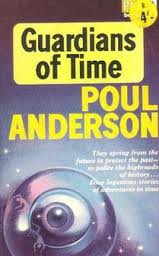
Past Times (a revised edition) by Poul Anderson
The Time Patrol by Poul Anderson
The Shield of Time by Poul Anderson
Jack Finney's time travel short stories collected
Time And Again by Jack Finney
From Time To Time by Jack Finney


Circular Causality

"The Chronic Argonauts" by HG Wells
"A Stitch in Time" and "Chronoclasm" by John Wyndham
"By His Bootstraps" and "'- All You Zombies-'" by Robert Heinlein
The Door Into Summer by Robert Heinlein
The Technicolor Time Machine by Harry Harrison
Beyond The Barrier by Damon Knight
The Corridors Of Time by Poul Anderson
The Dancer From Atlantis by Poul Anderson
There Will Be Time by Poul Anderson
Bid Time Return by Richard Matheson
The Time Traveller's Wife by Audrey Niffenegger


The Curious Sub-Sub-Genre of Juvenile Historical Fantasy Time Travel Novels by English Women Writers
 
A Traveller In Time by Alison Uttley
The Moon Dial by Helen Cresswell
Tom's Midnight Garden by Philippa Pearce
The Story Of The Amulet by E Nesbit
etc


Not to be included 

The End Of Eternity by Isaac Asimov
The Legion Of Time by Jack Williamson
The Big Time by Fritz Leiber
Up The Line by Robert Silverberg
The Man Who Folded Himself by David Gerrold
11/22/63 by Stephen King


For discussion of some of these works, see here and here. An extra volume of the Archives would be an Editorial explanation of inclusions and exclusions. Apart from the circular causality paradox and the curious sub-sub-genre, I found it impossible to list the categories separately. Causality violation is possibly attempted in A Connecticut Yankee and subtly implied in The Time Machine before it occurs in Lest Darkness Fall, thus initiating a divergent timeline.

"Missing One's Coach" and the first five items in the "Circular Causality" list could form a collection.

The Logic of Time Travel: Part II

See Part I.

The End Of Eternity by Isaac Asimov assumes a successive timelines theory. Asimov’s time travellers (“Eternals”) have a base (“Eternity”) outside normal space-time, presumably in a fourth spatial dimension. From Eternity, they enter successive timelines (“Realities”) either to observe events or to violate causality (“Change Reality”), thus generating subsequent timelines. After many such causality violations, and thus after many successive timelines, an Eternal enters the current timeline at a point further back in its past than usual. His task is to complete a causal circle that will bring Eternity into existence. Surely, to do this, he would need to get back into the original timeline from which the first Eternals had come before they constructed Eternity? Asimov does not realise this difficulty.

There are other problems with the Eternals. They academically discuss whether a time traveller can meet himself instead of experimenting to see whether he can.


The Eternal who has travelled to the twentieth century in order to ensure the founding of Eternity decides not to complete his mission. When he has made this decision, the vehicle in which he has travelled disappears. Why? And, if it disappears, why doesn’t he? Eternity is staffed by Eternals who continue to exist even though their Realities of origin have been superseded. Eternity itself has survived its original Reality. Why should it cease to exist now because of subsequent changes made to the course of events in the twentieth century of a later Reality?

In the earlier, shorter version of The End Of Eternity, the characters state that Eternity is outside of normal time and then seem to assume that the same amount of time is elapsing for themselves in Eternity as for one of their number who has travelled to the twentieth century, as if they were simply in different places at the same time. Then it is said that it is standard practice, having spent, e.g., a year in “time” to arrive back in Eternity exactly a year after one’s departure as time is experienced by those who have remained in Eternity. It is an unusual procedure when someone arranges to arrive back a moment after his departure. Why should this be unusual? Time travellers should be able to do it all the time. There is no reason, having left time t1 and spent a year in an earlier period, to “return” to t1 plus one year instead of just to t1. You can travel to any time if you are a time traveller. 

I think that The End Of Eternity, particularly the shorter version, is too full of auctorially unnoticed inconsistencies to be salvageable as a coherent narrative. In addition, its action is set almost entirely in the artificial environment of Eternity (like a large spaceship in hyperspace), its few references to events in “Time” are to our future, not to the past, and it does not give any real sense of historical process in the future. Therefore, it lacks any of the saving graces as fiction and as literature that are possessed by Poul Anderson’s Time Patrol series and by Jack Finney’s Time novels.

In “The Red Queen’s Race” by Asimov, the characters know that a chemistry text book has been translated into Greek and sent to ancient Greece. They do not yet know that this book was the source of the fragmentary atomic theory in Greek philosophy, thus that there has been a causal circle. Instead, they fear a causality violation, i.e., an industrial revolution in ancient Greece. Further, they know that the book should have aged by the equivalent of twenty four hours for every hundred years that it travelled into the past. Since it travelled back two thousand years, they expect the causality violation to come into effect twenty days after the book was sent. Thus, they imagine this impossible sequence of events: 

the book containing knowledge expected to cause an industrial revolution arrived in ancient Greece;
for two thousand years, history unfolded without any effects of an industrial revolution in ancient Greece;
the book was sent from the twentieth century;
twenty days after that, the whole world changes into whatever state it would have been in if there had been an industrial revolution in ancient Greece.


Any effects of the book’s arrival should have occurred in ancient Greece, not two thousand years and twenty days later. This is eventually pointed out to the characters who had thought that they would be annihilated after twenty days but they still do not seem to realise the absurdity of their original hypothesis. However, “The Red Queen’s Race” does make more sense than The End Of Eternity.

Some novels (The Big Time by Fritz Leiber, The Legion of Time by Jack Williamson and Up The Line by Robert Silverberg) are even less coherent than The End Of Eternity so that it would be both more difficult to clarify what their failings are and less enjoyable to try to do so. However, one scene from Up The Line is easy to analyse and sets the tone for the rest of the book. A time traveller stands in a group watching an approaching Emperor. A woman standing in front of the time traveller and under his protection runs in front of the Emperor and is killed by a bodyguard. The time traveller moves one step forward and a few seconds pastwards. He is now standing between his slightly younger self and the woman. He grabs the woman, thus preventing her leap forward and summary execution. Seconds later, the version of himself whom he is standing in front of disappears. Why? And where/when does he reappear?

Let us call the time traveller who is holding the woman Traveller One and the one standing behind him Traveller Two. Traveller One remembers seeing the woman killed and has taken action to prevent this. Traveller Two does not see the woman being killed. He sees Traveller One appear and grab her. Therefore, Traveller Two does not know that it is his job to move one step forward and a few seconds pastwards and grab the woman. Even if he does try to do this, he will arrive a few seconds earlier to see Traveller One grabbing the woman and we must now talk about Traveller Three standing behind them. Thus, the time traveller irretrievably duplicates or triplicates himself but the events described by Silverberg cannot have happened on any hypothesis.

In Hawksbill Station by Silverberg, a time traveller thinks that, if he kills a trilobite, thus preventing the evolution of humanity, then he himself will disappear immediately after killing the trilobite. Why? If humanity had not evolved, then the time traveller would never have been born. Someone who has not been born cannot exist into adulthood, then disappear. Either there is a single discontinuous timeline in which a time traveller from a merely possible future appears, kills the trilobite and continues to exist, because there is no reason why he shouldn’t, or there are two timelines such that he is born in one and kills the trilobite in the other.

Also in Hawksbill Station, a repressive future regime sends political prisoners on a one-way trip to the remote past. Years later, a more liberal regime learns how to bring them back and begins to do so after they have been imprisoned in the past for years. Why does the liberal regime not rescue them from the past mere moments after their arrival there? The method of time travel used may be such that this is not possible but that should be elucidated in the story. Instead, it seems to be assumed that two times are really just two places co-existing at the same time with the same rate of duration. The prisoners might as well be teleported to a more primitive planet.

The Man Who Folded Himself by David Gerrold expounds a successive timelines scenario but immediately contradicts it in practice. Gerrold’s scenario: Moving either backwards or forwards in time takes a time traveler into a second timeline identical with the first except for any changes made by the time traveler, the first such change being his arrival. He leaves timeline 1 forever. If he continues to travel, then timeline 3 incorporates his arrival from timeline 2 and duplicates his arrival in timeline 2 unless this duplication is prevented by the time traveler after arriving in timeline 3, e.g., if he had arrived in timeline 2 during World War II but, then, in timeline 3, prevented World War II, then this would also prevent his arrival in the 1939-1945 period in timeline 3.

After expounding this scenario, Gerrold then describes the following transaction: the time traveler travels a short distance into the future, confers with his future self, then returns to the present to make use of his knowledge from the future. This could happen in a single timeline but, in Gerrold’s scenario, the transaction should be as follows:

the time traveller disappears forever from timeline 1;
no future self greets him in timeline 2;
he returns to the present in timeline 3;
later in timeline 3, he greets that timeline’s duplicate of his past self who had originally arrived in timeline 2;
that duplicate returns to the present in timeline 4 and there meets the duplicate of the self who had returned to the present in timeline 3.


Thus, by pulling this stunt, the time traveler should have unintentionally duplicated himself, although Gerrold does not realize this.

Harry Harrison wrote a definitive historical circular causality novel, The Technicolor Time Machine, but was less successful with Rebel In Time. In the latter novel, our hero knows that the villain has traveled back to a particular time in order to help the Confederates win the American Civil War. Hero travels back to thwart villain. The method of time travel used ensures that he arrives at the same place. (They are transmitted back from a particular research establishment rather than traveling in a vehicle.) Hero arranges to arrive a few hours after villain and then has to find him. Why did he not arrive before him in order to apprehend him on arrival?

It may be replied that this would have deprived the novel of the drama of pursuit in a historical period but this is not the point. The method and circumstances of time travel could have been adjusted to allow for this, e.g., if it is not possible to be precise about arrival times, then the hero might have to arrive a considerable time beforehand and hide elsewhere while waiting. Then, circumstances could prevent him from returning to the arrival point in time to catch the villain arriving. The point is that both the author and the characters seem to confuse time travel with travel through space or on the Earth’s surface. In familiar travel, if we depart after someone else, then we arrive after him as well. It seems to be taken for granted that this should also apply to time travel. That none of the people experimenting with time travel realizes this amounts almost to a logical contradiction in the novel.

I have read half a dozen sequels to The Time Machine, most of them disappointing. (Christopher Priest’s The Space Machine is more of a sequel to The War Of The Worlds.) In Time After Time by Karl Alexander, where Wells is the Time Traveller, his Time Machine changes in the middle of the novel and without explanation, from a vehicle that carries the Traveller through time into a static machine that merely endures through time while the Traveller moves backwards or forwards in time within it. Thus, when he arrives in his future/our present, he is in the U. S. because the Machine, which no one else knows how to use, has been moved to an American museum since Wells’ lifetime. Wells’ original Time Machine, even if it was going to be moved to the States after his death, remained spatially stationary during a time journey.

In another sequel, The Time Ships by Stephen Baxter, it is established that, whenever the Time Traveller visits the future and returns to the present, he changes events so that his next forward trip is to a different future. One such future is a twentieth century in which the Time Traveller had never returned to the nineteenth century but there are technologies based on what was found in his laboratory. On his next past-wards trip, he not only visits his pre-time travelling self but also brings that younger self with him to the twentieth century and never returns him to the nineteenth century. Despite this, the twentieth century which they enter is still that in which the nineteenth century Time Traveller had travelled through time and disappeared, leaving significant materials in his laboratory. I have other problems with the novel:

I find it arbitary and unacceptable that the White Sphinx and the Morlocks exist in an earlier period in a later timeline;
it is questionable whether, after innumerable causality violations and successive timelines, the Time Traveller would be able to return, as he does, to his original timeline;
when he does, his attempted intervention in the Morlock-Eloi society is minimal compared with what could have been done by marshalling the resources of earlier periods, e.g., exterminate the Morlocks, put the Eloi in a reservation and repopulate the paradisal Earth with un-devolved humanity;
since Wells’ story did not involve causality violation, I do not think it is appropriate to introduce it in a sequel;
there is more than enough scope for a sequel simply in exploring the timeline and future history that Wells had outlined;
I do not think it is appropriate to use the name “Plattner” without introducing the title character of “The Plattner Story” or to apply the name “Nebogipfel” from “The Chronic Argonauts” to a Morlock;
The novel summarises post-Wellsian ideas but does not innovate as Wells did and would more appropriately have been written, as it was originally conceived, as an independent time travel novel, not as a sequel to The Time Machine.


“The Dark Tower” by C. S. Lewis is modelled on The Time Machine. It begins with a group discussion of time travel theory and proceeds to a practical demonstration, albeit of chronoscopy, not of chronokinesis. Orfieu argues against the possibility of bodily time travel as follows:


no particle can be in two places at the same time;
the particles which at present make up the tip of someone’s nose will, by 3000 A.D., be doing something else, e.g., forming part of a chair;
therefore, if he travels to 3000 A.D., taking his present body with him, then the same particles would be both in his nose and in the chair, which is absurd.


It is true that it is usually regarded as impossible for one particle to be in two places at one time, if only because, when we detect a particle in one place and a particle in another, then we automatically regard them as different particles. However, there is a situation in quantum mechanics when two particles emerge from one point, then one of them mutually annihilates with an already existing particle. This can be interpreted not as creation and annihilation but as one particle travelling briefly backwards in time and therefore momentarily existing in three places simultaneously. Orfieu’s argument amounts to saying that time travel is impossible because time travel is impossible.

Even on Orfieu’s argument, a human body from the twentieth century would be able to spend a week in 3000 A.D. if only the atoms that had composed it could be detected in 3000 and sent back to the twentieth century to fill the gap. (There would not have to be corresponding weeks: the time traveller could spend a week in the future and return to the present a second after leaving it; the particles from the future could spend a second in the present and return to the future a week after leaving it.)

Another way around Orfieu’s objections would be to assemble a duplicate body with the appropriate memories and sense of identity in 3000 A. D., then, after a week, disassemble the body while transmitting its newly acquired memories back into the brain of the original body in the twentieth century. In this case, only information would have time travelled. 

Lewis’ chronoscope reveals not a past or future time but a divergent or parallel timeline. Lewis hypothesizes that identical bodies could exist in different timelines and that their minds could be swapped through the chronoscope. Thus, he describes not physical travel backwards or forwards in time but mental travel sideways in time. This does not count as time travel but his opening discussion is about time travel.

In “A Little Something For Us Tempunauts” by Philip K. Dick, three U. S. “tempunauts”:

set out to travel a week into the future;
arrive back from the future;
die instantaneously in an implosion on their return (“re-entry”);
arrive in the future a week later;
attend their own funeral;
are told that the implosion occurred because one of them disobeyed orders by carrying too much mass back with him.


Each event in this sequence occurs only once, is experienced only once and is remembered as having happened only once. Despite this, the characters speak as if it is possible, though not certain, that the tempunauts and, by extension, everyone else are somehow re-experiencing the sequence endlessly. I cannot see either that this idea means anything or that it should matter to anyone if it does since they do not remember the endless repetition. There is evidence that the world does continue to exist after the tempunauts start their return journey because two Russian “chrononauts” are said to have gone fifty years into the future.

The suicidal tempunaut has feelings of tiredness and déjà vu that convince him alone of endless recurrence. This would make sense as an irrational fear in the mind of a disturbed time traveller but everyone else accepts that his idea is possible. Next, he develops two nonsensical ideas. First, having already accepted that the implosion is part of the repetition, he now thinks that, by causing the implosion, he will end the repetition. Secondly, he is informed that, if there is a repetition, then it is probably caused by the implosion. He then decides to cause the implosion because he has suddenly identified the repetition with eternal life. This does provide a comprehensible, if insane, motivation for the tempunaut who disobeys orders by carrying back too much mass.

The film Back To The Future is a mixture of good, questionable and atrocious time travel theory. There is good circular causality. The hero, having seen the Professor shot, travels into the past and gives the younger Professor a letter warning him about being shot but the younger Professor tears up the letter unread on the grounds that no one should know their future. The hero returns to the present, witnesses the shooting plus his younger self’s disappearance into the past and runs over to the Professor’s body. The Professor then sits up, revealing that he had stuck the letter back together and has been wearing a bullet-proof vest. 

That could happen in a single timeline. However, there has also been causality violation. Because of the hero’s activities in the past, his family is now conventionally successful whereas he remembers them as failures. Either he is now in a different timeline, in which case the circular causality will not work, or there is still only a single timeline allowing for both circular causality and causal discontinuity. The latter would mean that the time traveller “remembers” some events that did not occur. He correctly remembers seeing the Professor shot but incorrectly remembers his family’s social status. The successful parents recognize him as their son so what has become of the version of him that knew them? Or, if there is only one him, why does he arrive in the past with partly incorrect memories? It is difficult to fit both causality paradoxes into a single timeline.

It is atrocious that, when he is in the past and the probability that his parents will not marry has increased, his image disappears from a family photograph that he has brought with him. The younger Professor immediately interprets this as evidence that the hero’s birth is in jeopardy instead of just classifying it as an inexplicable event. Later in the film series, the headline on a newspaper held in the Professor’s hand instantly changes as he changes the events described in the newspaper. Why should this happen and, if it does, why do all other records, including the Professor’s own memories, not change as well? 

On another occasion, the hero’s girlfriend was last seen in a dangerous situation in an undesirable timeline. The Professor’s solution is simply to leave her there but change the past so that she will be alright when everything changes around her. Everything will not change around her. A new timeline will be created but she will still exist in the old one. The time travellers having left that timeline may now regard it as past and therefore no longer existent but, to the girl in that past timeline, her dangerous situation will not have ceased to exist. 

In a film whose title I forget (TimeCop?), the hero travels to the past and there encounters villainous characters who discuss preventing his birth. They conclude that his birth has not been prevented because “he is still here”. If he has travelled from the “present” of timeline 1 to the “past” of timeline 2, then it is possible that someone else has travelled from timeline 1 to timeline 2 and prevented his birth in timeline 2. His appearance in timeline 2 proves only that his birth has not been prevented in timeline 1. Births in timeline 1 are prevented by sexual abstinence, contraception, abortion or accidents preventing encounters between potential parents but not by time travellers from any previous timeline. Thus, if someone’s birth had been prevented in timeline 1, then he would have no existence whatsoever and would not even be remembered by any time travellers. No one would have set out to prevent his birth.

In a Dr. Who episode, the Doctor sends his assistant forward a minute. To him, she disappears for a minute. To her on arrival, he disappears temporarily because “he has not got there yet”! This is nonsensical. If three dimensional bodies move uniformly along another dimension and she jumps ahead for a minute’s worth of travel, then the whole universe, not just the Doctor, will disappear from her view because “they have not got there yet”. Further, she will have jumped ahead not in time but in a fourth spatial dimension and motion along that dimension will take time. If she moved forward in time, then she would arrive at the moment when the whole universe, including the Doctor, had moved forward for a minute’s worth of travel in the fourth spatial dimension. And if she moved forward only in time and not also in space, then she would have been left behind.

In the Star Trek episode “Tomorrow Is Yesterday”, the Enterprise, approaching Earth, accidentally slips back to the twentieth century, focuses a tractor beam on a USAF fighter plane that buzzes it and has to ”transport” (teleport) the pilot aboard when his plane breaks up in the tractor beam. Later, the Enterprise crew want to return the pilot to Earth without his memories of having met anyone from the future. Superior technology, futuristic drugs or Vulcan mind meld should be able to remove his memories. Instead, they go briefly back in time before returning home. While doing this, they return the pilot to the cockpit of his plane a moment before they had taken him out of it. This is meant to deprive him of his memories. The problems are: 

Why is there suddenly a rule that anyone who travels back to a particular time forgets everything that happened after that time?
If there is such a rule, then why have the Enterprise crew not suffered total amnesia because they have travelled to a time before their births?
There should now be two versions of the pilot sitting in the cockpit, unless he occupies the same space as his younger self and they both explode.


The Enterprise crew have done nothing to change the fact that the fighter plane is breaking up. Thus, the pilot whom they have just returned to the plane should now die in it unless he can bail out, which is what they were trying to save him from in the first place. Instead, he is shown inexplicably losing sight of the Enterprise and flying away unharmed. 

I heard this described as a “neat solution” to the problem in the story.

I have heard it argued that it should be impossible to travel forward to a time after your own death presumably because it is usually impossible to be alive after you have died. Someone who travels into a remote future and stays there will die there and thus will not have travelled forward to a time after his death. Someone who travels into the remote future, returns to the present and does not time travel again will die in the near future and thus will exist in the remote future after his death. Someone who travels to and stays in the remote past has already died before he was born. The uncanniness of meeting someone after you have known that he was dead is an emotional hazard of time travel noted in The Door Into Summer by Robert Heinlein. In The Time Traveller’s Wife by Audrey Niffenegger, a child who is used to it can say that her father is not dead all the time because he is a time traveller.

Although “A Sound Of Thunder” by Ray Bradbury is the best known, most anthologised, definitive causality violation story, it has its oddities which can be left to the attentive reader to find. All of this shows that time travel fiction can be both more satisfying and more dissatisfying than any other sf.


The Logic of Time Travel: Part I

  (Note added 8 Oct 2020: Diagrams have disappeared from this post and I do not know how to restore them.) (10 May 2024: The diagrams are back, more or less.)

The basic concept of a time traveller is of someone who disappears and either reappears later or has appeared earlier. Disappearance is departure from the present. Later reappearance is arrival in the future. Earlier appearance would be arrival in the past. For story purposes, disappearance and (re)appearance are preferable to visible, tangible continuity between departure and arrival because they enable the traveller to arrive unexpectedly in the future or in the present when returning from the past. He also arrives either unaged and, in his own experience, instantaneously, or undergoes significantly reduced aging and duration. Otherwise he would merely endure time, like everyone else, not ‘travel through’ it.


Merely futurewards time travel would be merely invisible time dilation or temporal stasis. Therefore, time travel as such requires at least the possibility of pastwards travel, which includes returning to the present from the future. Anyone who arrives in the future but cannot return to the present is not a time traveller. Supernatural or magical time travel is fantasy whereas scientific or technological time travel is science fiction (sf).


Travel into the past reverses the order of cause and effect and therefore creates the causality paradoxes. When appearance or arrival precedes disappearance or departure, then an effect precedes its cause and might therefore cause it (this would be the circular causality paradox) or even prevent it (this would be the causality violation paradox). Causality violation is also called ‘changing the past’ because the cause can be prevented only by altering the course of preceding events. Altering events here means making them different from what they would have been if they had produced the cause and also different from the time traveller’s memories of them. In this sense, violating causality involves changing the past. Similarly, any changing of the past involves violating causality. For example, a time traveller who:

arrives in the 1930’s;
remembers having departed from the 1990’s with the intention of preventing the outbreak of World War II
and succeeds in preventing World War II;
thereby prevents his younger self from departing the 1990’s with the intention of preventing World War II.
In fact, in this case, he changes the course of so many lives that he almost certainly also prevents his own birth. Thus, his arrival in the 1930’s, and even his very existence, are, apparently, uncaused.


A paradox is either an actually or only an apparently self-contradictory proposition. Causality violation is on the face of it, actually contradictory: the cause occurs, because it produces its effect, and does not occur, because it is prevented by its effect.


There are several possible solutions, which are discussed further below. One involves divergent timelines. A timeline is a single, chronologically linear, sequence of events like familiar twentieth century history in which particular events occur on particular dates and only on those dates:


1914 beginning of World War I
1917 Russian Revolution
1918 end of World War I
1939 beginning of World War II
1945 end of World War II
1963 assassination of Kennedy
1969 first moon-landing
1991 end of Cold War, etc.


A sequence of events in which World War I occurred earlier or later or not at all or had a different outcome etc would be a different timeline. A sequence of events that was identical with our history until 1939 but then differed because, e.g., World War II did not occur could be described, from 1939 onwards, as a diverging timeline. Divergent timelines enter time travel fiction as a possible solution to the causality violation paradox because it can be argued that the cause occurs in an original timeline but is prevented in a divergent one. However, alternative and multiple timelines can also be considered in their own right simply as alternative versions of historical periods or of fictitious characters’ lives. (Stories simply about alternative timelines usually involve sideways travel between parallel universes in present time with no backwards or forwards time travel and thus are not time travel stories.) The questions of whether there can be more than one timeline and, if so, how they are related are considered further below while trying to solve the causality violation paradox.


Possible Solutions to the Causality Violation Paradox


1. The Logical Impossibility of Causality Violation in a Single Timeline
 Hitler was not killed or kidnapped in childhood. Therefore, either no-one tried to do this or someone tried and failed, even if we do not know the precise reason for failure: accident, apprehension, arrest etc and even if the person who tried had foreknowledge of Hitler’s career and had wanted to prevent it. This remains true even if the source of foreknowledge was time travel from Hitler’s future. In fact, introducing time travel increases the number of possible reasons for failure. It would not be easy for a time traveller from a later period to find the best time and place at which to intervene in order to interrupt Hitler’s early life, which might even be protected by pro-Nazi time travellers. Therefore, causality violation is logically impossible because it cannot be true that something happened when it is already known that it did not happen. More specifically, it cannot be true that someone performed a task when it is already known that it was not performed, thus that, if anyone tried, they failed.


Unfortunately, if time travel became common, then the number of adverse circumstances and accidents necessary to prevent causality violation would become statistically impossible. Therefore, there has to be some reason either why time travel does not occur (e.g. because it is impossible or because it is so difficult that no-one ever finds out how to do it in the whole history of the universe) or why its use is extremely limited (e.g. because it requires too much energy or because the theory is valid which stipulates that any time journey would also have to be a long space journey, thus precluding effortless disappearance and reappearance on Earth’s surface in recent historical periods).


(Added on 21 April 2006: Thanks to Colin G. Mackay for pointing out that there is no such thing as a "statistical impossibility". My argument should be re-phrased: Something must happen to prevent a logical contradiction but, by definition, it is extremely improbable that an extremely improbable event will always occur just in time to prevent any logical contradiction.)


2. The Immutability of Past Events
Past events, even when visited from the present, remain past and therefore cannot be affected by anyone from the present. Therefore, pastwards time travellers remain invisible, intangible and inaudible when in the past, not just when travelling to or through it. They are like ghosts from the future. Unfortunately, this is time-viewing, not time travel.


3. A Discontinuous Timeline
If causality is violated, then the prevented cause, e.g. the time traveller’s departure, simply does not occur, although it is ‘remembered’ by the appearing time traveller, and the effect, i.e. his appearance, is uncaused, therefore not really an effect. Events are discontinuous, as in quantum mechanics. This seems to be logically possible but is extremely paradoxical in the sense of apparently contradictory:

a traveller appearing now could be from the past, from the future or from no time;
 anyone leaving the present to kidnap Hitler will still fail because Hitler was not kidnapped but travellers from possible futures could prevent those futures;
some past events could have been caused by arbitrarily appearing time travellers that we do not know about;
 .c\xvvvba traveller arriving in what he regards as the past does not know whether he remembers a real future or a prevented one;
in fact, before leaving the present, a traveller knows that his memories are valid but, on arriving in the past, he does not know this!

Time travellers in this discontinuous timeline would almost certainly think in terms of divergent or multiple timelines even if time travel theory denied them.


The causal principle can be partly salvaged with the following diagram:


A
C
(B)

ABC is the usual causal order but here B is the time traveller’s departure and C is his arrival which prevents B. A is an earlier event, like the invention of a time machine, which would have caused B. Thus, A occurs and would have caused B which would have caused C which, however, occurs and prevents B. Thus, indirectly, A causes C. C would not have occurred without A although, to a casual observer, AC looks like a causality violation.


4. Divergent Timelines
If causality is violated, then a second timeline diverges from the original one:


Horizontal line =original timeline
Slanting line =divergent timeline
D =time traveller’s departure from his present
A =his arrival in the past

Questions:
Do the timelines diverge at the moment of the time traveller’s arrival?:


Or at some later moment when he definitely violates causality, e.g., by kidnapping Hitler?:


Sometimes, A would equal V:


e.g., if the time traveller appeared in front of the TV news reader the previous evening but, if he appeared unobserved in an otherwise empty room, would this change the past? Is the answer arbitrary: i.e., it would only change the past if we somehow knew that, in the original timeline, the room had remained empty? But why should the past not sometimes change without our knowledge?


In the scenario where the traveller can exist for a while in the past before violating causality:


two strange things happen at point V. First, to observers in the original timeline, the traveller simply disappears. Secondly, he creates around himself an entire new universe identical to the first except for any changes made by himself. How can this happen?

Having initiated and entered the new timeline, does he remain in it or revert to a moment just after point D on the original timeline? The latter does not seem to be logically necessary although I have seen it argued that the original timeline is the only one that he can properly exist in. What happens might partly depend on the method of time travel used. If the method involves sending a traveller into the past for a finite period, then recalling him to the present, the recalling to the present might or might not work between timelines, although I suspect that it would not.


If V does not prevent D from recurring on the divergent timeline, then what happens?


5. Disappearing Timelines
It is sometimes imagined that, if causality is violated, then the original timeline somehow ceases to exist but there are different possible meanings of this idea. One possible meaning is that in the original timeline, the entire universe ceases to exist at point D:


In this case, we would need to worry about anyone who intended to travel into the past in order to change history! However, although cessation of cosmic existence is logically possible at any time, it is not logically necessary in the case of causality violation, because the above discussion of diverging but co-existing timelines was not self-contradictory, and it is physically impossible according to empirically discerned conservation laws.


Further, if the entire universe were to cease to exist as a result of a causality violation, then it would more logically cease to exist at the moment of the violation, e.g., when Hitler is killed or kidnapped, not at any later moment, because, arguably, there would be no later moment in this timeline:


But then it makes more sense to say not that the original timeline has been caused to go out of existence but that it has been prevented from coming into existence. This implies a scenario not of two timelines, one of them ceasing to exist, but of one discontinuous timeline:


which was 3. above: A C (B)

6. Parallel Timelines
If we want more than one timeline but do not want time travellers creating universes, then we can say that the many universes simply co-exist but there are different ways to develop this idea. If the idea is used to explain causality violation by a time traveller, then its simplest version is as follows:

many initially identical timelines exist in parallel with each other;
whenever a time traveller moves either forwards or backwards in time, he also moves sideways into the next timeline;
therefore, when he seems to enter the past or future of his own timeline, he in fact enters the past or future of a second timeline identical to the first except for any changes that he makes in it, the first such change being his arrival:


(V may or may not prevent D in the second timeline but cannot affect D in the first timeline.)
There are three problems with this scenario. First, the time traveller does not get into the past of his own timeline, which is surely the purpose of time travel.

Secondly, because he does not get into his own past, there cannot be circular causality in this scenario: A in the second timeline cannot cause D in the first timeline. Of the two causality paradoxes, sf writers usually assume either that only circular causality is possible (because there is only one timeline) or that both are possible (presumably because timelines diverge when causality is violated but not otherwise) but not that only causality violation is possible (because they do not consistently assume the simplest parallel timelines theory). Thirdly, the time traveller never returns to his ‘present’ or starting point in the original timeline:


D2=departure from past for return to present
R=return to present, not until the third timeline


SF writers usually assume that, unless a time traveller changes the past, he can re-join his acquaintances in the original timeline, not just their duplicates in another timeline. The theory needs to be progressively complicated in order to allow for the kind of stories that get written.

First complication:

Futurewards time travel is along the same timeline and only pastwards travel is into a second timeline:


Second complication:

Only pastwards travel that leads to overt causality violation, like kidnapping Hitler, would take the time traveller into a second timeline. Thus, a mere reconnaissance into the past would look like this:


These two complications allow the time traveller to re-join his original acquaintances and allow A to cause D but also allow for causality violation.

A third complication would be that, after violating causality, the time traveller returns to the original timeline:


However, this complication is unnecessary because it is usually assumed that a traveller who changes history and returns to the present returns to an altered present which, in this scenario, is the present of the second timeline:


In this case, the traveller simply disappears from the point of view of his original acquaintances. Either they develop a parallel timelines theory or they conclude that attempted time travel is elaborate suicide.

Fourth possible complication:

Do two travellers from the same original timeline arrive in the same second timeline:


or not? Could there be a different series of timelines for each traveller, the second series at right angles to the page and others in further dimensions? This is another unnecessary complication which would prevent travellers from interacting with each other among the same historical events and would move the idea away from time travel towards parallel universes as such. Thus, parallel timelines with two out of four possible complications seems to be the simplest way to account for causality violation by time travellers.


7. Successive Timelines
There is a fifth possible complication of parallel timelines which allows for a third possible meaning of the idea that causality violation causes a timeline to cease to exist. In the parallel timelines theory as developed above, (i) the causality-violating time traveller enters each new timeline successively and (ii) the contents of each new timeline are determined by the contents of the previous timeline as modified by the time traveller. This suggests that there is a causal relationship between a timeline with a time traveller disappearing from it and the next timeline with the time traveller appearing in it. The phrases ‘new’, ‘successively’, ‘determined by’, ‘previous’, ‘causal relationship’ and ‘next’ suggest a temporal relationship between timelines.
We can imagine them not as paralleling each other in a fourth spatial dimension:


But as succeeding each other in a second temporal dimension:


If this is the case, then, from the point of view of a time traveller who has entered a new timeline:


his original timeline is now past in two senses. First, it is in his memory and thus in his subjective or personal remembered past. But in the discontinuous timeline scenario (3, above), this was compatible with the remembered timeline simply having no existence whatsoever. In the successive timelines scenario, the original timeline is in the objective past of the axis T2 and anything which is in an objective past can be said to have ceased to exist. In fact, the timeline will have ceased to exist from the point of view of a hypothetical four-dimensional observer for whom our T1 and T2 equal his S4 and T1, respectively.


This partly agrees with the way the issue is discussed in some sf stories. It is sometimes imagined that, if causality is violated, then the entire original timeline, from beginning to end, somehow ceases to exist. This is different from saying either that the universe ceases to exist at a particular moment of the original timeline or that the timeline has never existed. First, it existed. Now it does not. The terms ‘first’ and ‘now’ do not apply to any moments within the timeline itself. Subjectively, they apply to a temporal sequence in the time traveller’s memory.

Having ‘changed the past’, he experiences the ‘changed’ sequence of events while remembering an ‘original’ one. Objectively, the terms ‘first’ and ‘now’ apply either to nothing, as in the discontinuous timeline scenario, or (the only possible alternative) to a second temporal axis (T2) at right angles to the familiar direction of time (T1).


However, it is usually added in sf stories that cessation of a timeline means annihilation for its inhabitants so that, in their own self-interest, they should try to prevent D, the time traveller’s departure on his causality-violating mission. In fact, they would do better to prevent time travel or, failing this, to regulate it with a Time Patrol. Despite this assumption, it should be clear from the diagram that:

(i) T1 is the only arrow of time experienced by the inhabitants of the original timeline;
(ii) in T1, they exist until D and then continue to exist after it;
(iii) for them, the only result of D is that the time traveller disappears permanently from their universe;
(iv) in their experience, there is no moment at which their timeline ceases to exist;
(v) the time dimension in which the time traveller says that they have ceased to exist is not the one that their world lines extend along but is at right angles to it;
(vi) thus, all that they lose is some potential temporal width that they are not even aware of;
(vii) in the original timeline, an observer who knows about successive timelines can remark that this timeline is or will be (a new tense is needed) regarded as having ceased to exist by a time traveller;
(viii) however, this time traveller will himself have disappeared, or apparently ceased to exist, from the point of view of anyone who remains within the timeline.

Therefore, the inhabitants of the original timeline need not try to prevent D.


8. A Mutable Timeline
I have heard it argued that we can imagine one changeable timeline instead of many successive timelines. However, change involves a relationship between a state changed from and a state changed to. (If there were only one state, then there would be no change.) This relationship between changing states is a temporal relationship of ‘before’ and ‘after’.


Therefore, everything argued above about temporal relationships between timelines applies equally to temporal relationships between states of a timeline (if we want to use this changed terminology):


Inhabitants of an original state of the timeline need not be concerned that their state is or will be regarded as having ceased to exist by a time traveller who arrives in another state which has no existence on their T1 axis. The difference between successive timelines and a mutable timeline is merely terminological. Poul Anderson’s Time Patrollers sometimes speak as if they inhabit a single, discontinuous timeline, sometimes as if they inhabit a series of successive timelines and sometimes as if they inhabit a single mutable timeline. (1) (Although I have just argued that these last two options are identical, I here allow for characters and authors who seem to think otherwise.)


If they inhabit a single, discontinuous timeline, then some passages of some stories describe not events which did occur but events which would have occurred if they had not been prevented later in the story. We have to finish the story in order to be certain which events did occur. The passages set in ‘deleted timelines’ describe not experiences which the characters had but only experiences which they remember having had. The Patrollers definitely believe that any deleted timeline is utterly non-existent, even from its own point of view, i.e. that it does not have a point of view. This is consistent with the single, discontinuous timeline scenario.


On the other hand, even when they are in a particular timeline, Time Patrollers believe that it is possible that that timeline will be deleted and thus will turn out never to have existed in any sense whatsoever. I do not think that it is possible to make sense of this idea. First, if we assume a single, discontinuous timeline, then the deleted or prevented timeline should have no existence in the first place. Therefore the very fact that the Patrolmen are in the timeline while discussing it is already sufficient proof that it is not/has not been/will not be deleted.


Secondly, if we assume the parallel timelines/mutable timelines scenario(s), then yes, after causality has been violated, the original (state of the) timeline will have ceased to exist in the temporal dimension, T2, but it will still be true to say that it did exist in the past of T2. There will then be a subsequent (state of the) timeline. Within this timeline (I will now stop adding the qualifying phrase, ‘state of the…’), it will be true to say that the events of the original timeline have never occurred but this statement is true in T1, not in T2. It is not absolutely true. Patrolmen seem to be confusing questions of existence along two different temporal axes and their superhuman superiors, the Danellians, clearly have some reason to encourage this confusion.


However, the Patrolmen’s belief motivates them to preserve their timeline in T2 just as belief in God and the Devil motivated medieval monks to preserve Biblical and Classical literatures. Just as we can read about the Middle Ages without believing in the supernatural, so we can read about Time Patrol members without sharing their belief in the consequences of causality violation. A Time Patroller who is in his past has to prevent causality violations in order to be able to return to his version of the present and drama is added by his belief that that present would be not only inaccessible to him but also completely non-existent. The Time Patrol series more than compensates for any underlying incoherence by its colourful historical and even mythological reconstructions, its characterisation and its increasingly complicated time travel plots. Logical consistency is a major factor but not the only factor in the success or failure of time travel fiction.


9. Unwinding A Timeline
The Directors of Jack Finney’s top-secret government Project propose to send a time traveller into the past in order to alter Cuban history in the interests of U.S. foreign policy and they promise to be grateful to the traveller for completing this mission, clearly without considering that they and their memories will be affected by the alteration so that they will be unaware that it has happened or that they have benefited from it. (2) This may be an inconsistency, although a major one, in the minds of the characters rather than in the text of the novel. However, in the second novel, when history has been altered, a handful of people do have partial memories of other or ‘earlier’ timelines and even find physical evidence for them, like a ‘campaign button’ from John Kennedy’s second election campaign. (3) It is as if the causality violating time traveller had literally rewound a period of time and let it run forward again with an altered content but with some traces of the original content. This is presented as if it were an expectable, and not a highly questionable, consequence of causality violation. Four early chapters of the second Time novel serve only to move the action awkwardly, with the help of implausible sideways memories, from one timeline to another. (4) The characters could have learned that they were living in a subsequent timeline simply by reading the time traveller’s published account of the causality violation in which he prevented a meeting between the couple who would otherwise have been the parents of the founder of the Project. Then, without needing to have any memory of the Project, these characters could have set about retrieving it, as they do, by preventing the prevention of the meeting. However, Finney’s nostalgic accounts of past times and even of a lost timeline in which the Titanic did not sink and World War I was prevented more than compensate for any weakness in his time travel logic just as The Time Machine remains a classic despite the incoherence of its opening discussion of time first as a direction of static material extension and only of immaterial mental motion, then as a direction of variable material motion. (5) (In the latter case, there is nothing other than the entire universe for that universe to change its position in relation to, and the accelerating time machine should simply leave the rest of the universe behind it!)


To summarize theories of time travel:
1. The Logical Impossibility of Causality Violation in a Single Continuous Timeline
2. The Immutability of Past Events
3. A Single Discontinuous Timeline
4. Divergent Timelines
5. Disappearing Timelines
6. Parallel Timelines
7. Successive Timelines
8. A Mutable Timeline
9. Unwinding a Timeline
This is not necessarily a comprehensive list. A test of any story’s internal consistency could be: 

does it conform to any of these theories? If not, does it manage to be internally coherent by any other criteria? In practice, any given story will probably, if it is not completely incoherent, imply one of the above theories but not be fully consistent with it.

See Part II.


End-notes


1. Poul Anderson, The Time Patrol (New York: TOR Books, October 1991).
2. Jack Finney, Time and Again (New York: Simon & Schuster Inc, 1970; London: Arrow Books Ltd, 1990), pp. 386-387.
3. Jack Finney, From Time to Time (New York: Simon & Schuster Inc, 1996), pp. 20-21.
4. Finney, From Time to Time, pp. 42-65.
5. H. G. Wells, The Time Machine (Heinemann, 1895; London: Pan Books Ltd, 1953, 1973), pp. 7-12.